

Transformation levels
Processing levels are concepts commonly used in the timber industry in almost every country around the world. These definitions have implications for traceability, reporting, statistics, and taxation. In most cases, the timber industry considers three levels of processing, which are independent of the number of processing stages the product undergoes. Unless clearly specified in national regulations, the ATIBT has adopted the following definition of processing levels to avoid any conflict or distortion of competition.
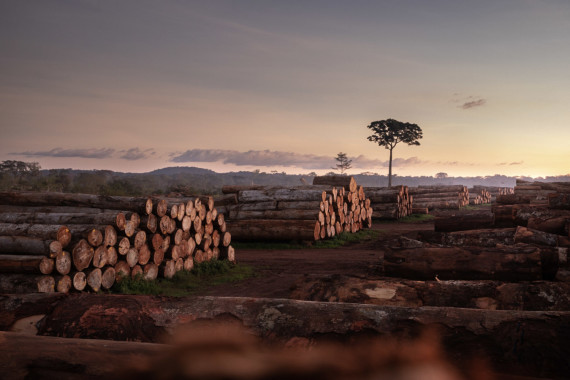
Logs
The log is a section of the trunk still covered with its bark. It is in this form that the wood is extracted from the forest and then transported to a log yard where it is stored awaiting sawing. Wood can be exported in the form of logs. However, this practice is declining, particularly in Central Africa, where the CEMAC (Economic and Monetary Community of Central Africa) is moving towards a gradual ban on their export.
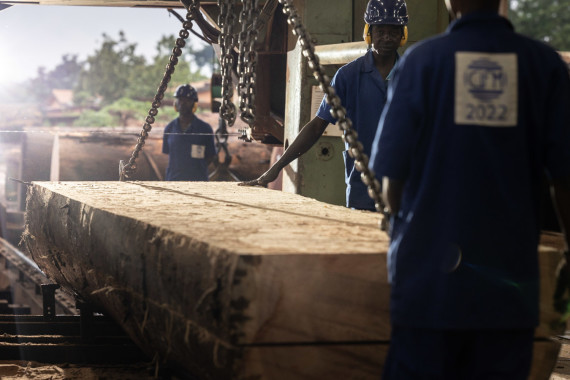
1st transformation
All of the processes directly applied to round timber that make it possible to obtain another product. Examples of products produced by primary processing are:
- Sawn timber (square-edged),
- Rough-sawn timber,
- Logs (sawn-through or boules),
- Sliced or rotary-cut veneers,
- Split wood,
- Wood chips, sawdust, shavings,
- Pulpwood,
- Firewood,
- Charcoal
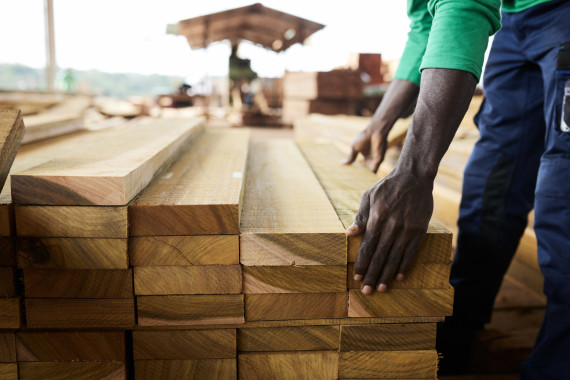
2nd transformation
All of the processes applied to products having undergone primary processing and which make it possible to obtain semi-finished and/or profiled elements. Products resulting from secondary processing are products that have undergone drying, treatment, planing, moulding, gluing, etc. processes. Examples of products produced by secondary processing are :
- Treated wood,
- Kiln-dried wood (KD),
- Planed wood, moulded or sanded wood,
- Semi-finished solid wood boards,
- Turned wood,
- Glued-laminated and/or finger-jointed blocks (for joinery),
- Pellets, briquettes, and other bulk biofuels
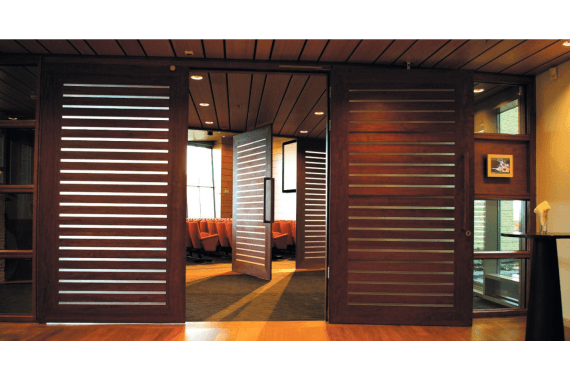
3rd transformation
all of the processes applied to products having undergone primary or secondary processing and which make it possible to obtain finished products (no further processing is necessary). Examples of products produced by tertiary processing are:
- Carved wooden objects,
- Musical instruments and parts thereof,
- Furniture and furniture components,
- Joinery (frames, doors, windows, and window frame components),
- Finished boards and profiles (flooring, cladding, paneling, decking, joists),
- Marquetry,
- Wood-based panels (solid wood panels, particleboard, fibreboard, OSB, plywood, blockboard, CLT/Glued laminated panels),
- Worktops,
- Pallets and wooden crates/boxes,
- Prefabricated roof trusses,
- Barrels,
- Pointed stakes and posts,
- Shaped railway sleepers (drilled, notched, chamfered),
- Paper, cardboard, bagged charcoal.
© Ravier SARL (photo extraite de l’Atlas des bois tropicaux 2016)
Charcoal
Charcoal is a material obtained through the pyrolysis of wood by-products. This process involves heating the wood in an oxygen-free (inert) atmosphere. Charcoal is mainly used for cooking food. Furthermore, depending on the type of pyrolysis, different bio-products can be obtained, such as bio-oil and bio-gas.